
The science behind the "movement-meditation hybrid"

In a world where stress is no longer the exception but the rule, more and more people are looking for methods that promote both physical fitness and mental stability. nbsp;BailongBall offers precisely this combination: a dynamic game that combines elements of TaiQi with Western racket sports in such a healthy way that it can have a measurable impact on our nervous system, metabolism, and even our social bonds.
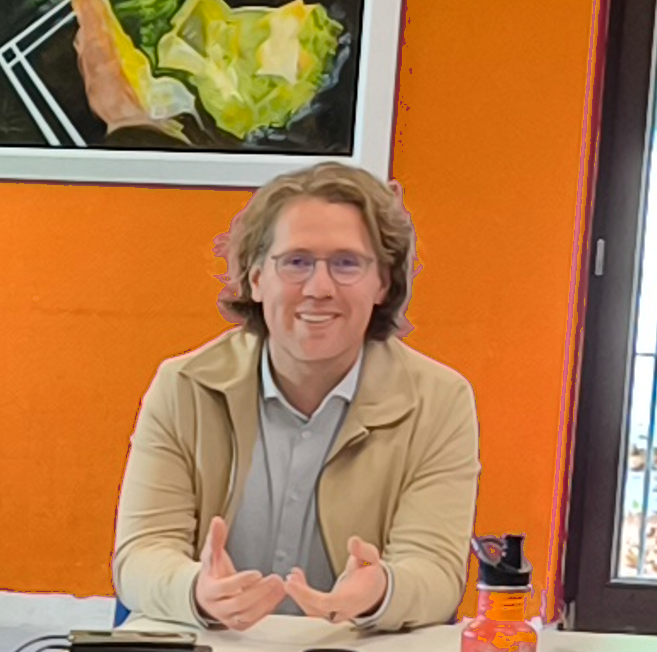
Fritjof Nelting's lecture on the occasion of the 20th anniversary of the TBBF in October 2025 provides a surprisingly in-depth picture of how training modulates physiological stress responses, which hormonal mechanisms play a role in this process, and why BailongBall can be seamlessly integrated into any athletic routine—without displacing other disciplines.
In this series of blog posts, we summarize the most important insights from Fritjof's lecture, linking them to practical aspects. Whether you want to incorporate BailongBall into your training or teaching, or are primarily interested in the health aspects of our sport, this series provides you with important, interesting, and in-depth background information.
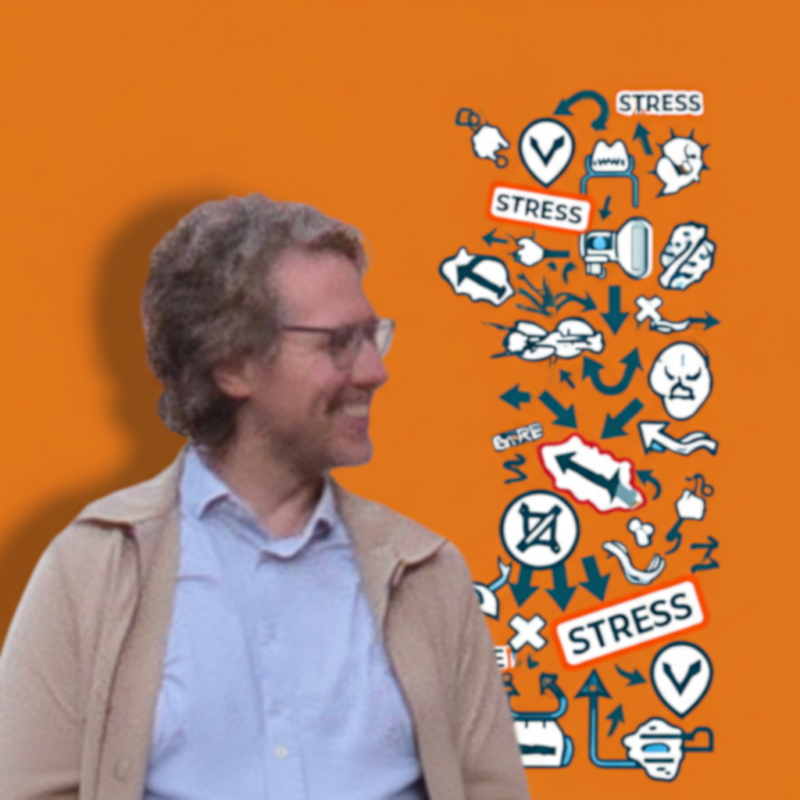
You may remember our update "Calmness, serenity, lack of intention, and BailongBall's role "? There, we briefly introduced Fritjof, talked about his lecture on the occasion of the 20th anniversary of the TBBF, and announced details about his insights. And here is the blog series on this topic. In part 1, Fritjof explains the role stress plays in our everyday lives today and how it affects our hormones. Translated with DeepL.com (free version)
1. Stress – from evolutionary emergency to modern-day strain
Our everyday lives are filled with many things, most of them happening simultaneously, and stress is a term that is often used. So before we take a closer look at sport and its influence on our physical and mental health, it is worth taking a look at something that can prove to be an obstacle to health—stress.
The original meaning of stress
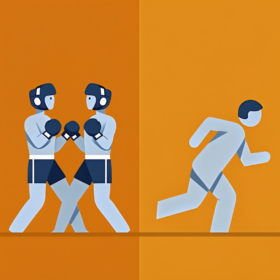
As an introductory topic, Fritjof first addresses the evolutionary context of stress and what happens when we experience stress: “...the body switches to energy-saving mode... now everything is geared towards movement, fight or flight.” In a real dangerous situation, this made sense—quick energy for escape or fight. And that was essential for our ancestors, for example, especially in times when they were regularly on the menu of saber-toothed tigers and other predators.
What's happening today?
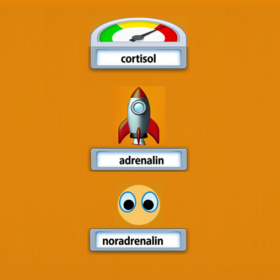
In modern everyday life, however, there are hardly any real predators left; instead, constant demands (from work to social media, financial worries, and much more) act as chronic stressors. Despite situations that are not inherently life-threatening, the body reacts with the same hormonal signals: cortisol, adrenaline, and noradrenaline are released to mobilize energy in the short term.
Energy management and creativity

A key finding is that creative thought processes suffer under intense pressure: the body prioritizes movement over complex mental work. Fritjof explains: “When we are under pressure, we are no longer able to actually think creative thoughts.” This explains why many people feel stuck in acute crises.
2. Focus on hormones – cortisol, insulin, leptin, and their effects
Cortisol – the key stress hormone in everyday life
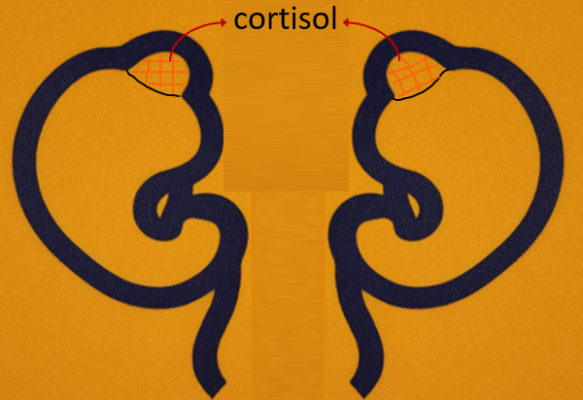
Fritjof points out that cortisol is the "body's first chemical response to stress." The adrenal glands release cortisol so that we can act quickly in dangerous situations, i.e., in our everyday stress as described above. The hormone mobilizes glucose from storage reservoirs, increases blood sugar levels, and ensures that muscles and the brain have immediate energy. At the same time, less urgent processes (e.g., digestion, repair mechanisms) are temporarily shut down—the body is in classic fight-or-flight mode. The benefit is short-term, but nevertheless: in this phase, cortisol is a useful protective system; it enables us to react quickly and muster the necessary strength.
Insulin – the shifted balance

Cortisol increases blood sugar levels because in acute stress situations, cortisol causes more glucose to be released from the liver (gluconeogenesis). This leads to a spontaneous increase in blood sugar. However, constant sugar spikes place demands on the insulin system—because stressors are frequent and recurring in everyday life, the pancreas must repeatedly produce large amounts of insulin. Fritjof describes the resulting cycle:
"If we continuously release large amounts of glucose, more insulin has to be produced ... it's a vicious circle that leads to insulin resistance."
Leptin – when stress makes you fat
But what to do with all that sugar? And above all, what if the muscles don't need all the energy generated by stress (since stress often takes place in the mind) and, due to our often automated daily routines (driving instead of walking, sitting instead of standing, etc.), require less and less movement and thus muscle work? Then the energy flows into fatty tissue instead of muscles, so to speak, because it has to go somewhere. And the less we move, the more muscle mass is converted into fatty tissue. The older we are, the more dramatic the effect.
And this takes us to leptin: it is mainly produced in fat cells and signals to the brain via the hypothalamus that sufficient energy is available ("I am full"). Fritjof calls it the "slim hormone" (Shou Su), because people who are full do not usually consume any calories.
Long-term stress is also often accompanied by increased systemic inflammation. These inflammatory mediators can impair the blood-brain barrier, preventing the leptin signal from reliably reaching the brain. In addition, the more frequently we eat fatty foods as a result of stress, the more leptin is produced, which in turn can lead to resistance—at some point, the central nervous system no longer perceives the excess.
Fritjof explains: "If we say too often in the evening, 'I've earned this now...' then we produce more leptin. At first, more signals are sent, but we become resistant to leptin relatively quickly, so the brain says, 'Give me more food.'"
The result: we gain weight...
So much for the chemical reactions in your body when stress throws your hormones out of balance. In the next part of this series, Fritjof explains how BailongBall can counteract the effects of stress. Don't miss it 😉
Fritjof Nelting
BailongBall Instructor
Mike Ritz
BailongBall Instructor
Danke für diese Beitrag.
Gefällt mir sehr gut.
Sehr verständlich und zugleich fundiert erklärt. Besonders interessant ist der Zusammenhang zwischen Bewegung, Stresshormonen und innerer Balance – das macht deutlich, warum sanfte, koordinative Trainingsformen wie Bailongball so wirksam sein können. Eine schöne Einladung, Körper und Geist wieder bewusster miteinander zu verbinden.