
The science behind the "movement-meditation hybrid"
In a world where stress is no longer the exception but the rule, more and more people are looking for methods that promote both physical fitness and mental stability. nbsp;BailongBall offers precisely this combination: a dynamic game that combines elements of TaiQi with Western racket sports in such a healthy way that it can have a measurable impact on our nervous system, metabolism, and even our social bonds.

Fritjof Nelting's lecture on the occasion of the 20th anniversary of the TBBF in October 2025 provides a surprisingly in-depth picture of how training modulates physiological stress responses, which hormonal mechanisms play a role in this process, and why BailongBall can be seamlessly integrated into any athletic routine—without displacing other disciplines.
In this series of blog posts, we summarize the most important insights from Fritjof's lecture, linking them to practical aspects. Whether you want to incorporate BailongBall into your training or teaching, or are primarily interested in the health aspects of our sport, this series provides you with important, interesting, and in-depth background information.

You may remember our update titled “Calm, Serenity, Lack of Intention, and Role BailongBall's Role”? In that post, we briefly introduced Fritjof, shared details about his talk at the TBBF’s 20th-anniversary celebration, and gave you a preview of his insights. And here is the blog series on that topic. In Part 1, Fritjof explains the role stress plays in our daily lives today and how it affects our hormones. In Part 2, Fritjof describes how BailongBall can help counteract stress.
5. The Learning/Comfort Zone Approach
Fritjof uses the well-known model comfort zone → learning zone → overwhelm zone and emphasizes that the size of our learning zone depends heavily on our available energy levels. Too much stress pushes people back into the comfort zone (even if it’s “not pleasant”), while a balanced level of stress expands the learning zone.
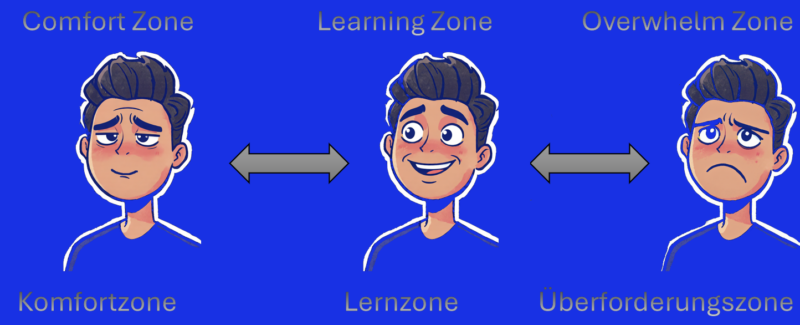
With its variety and low barrier to entry, BailongBall is virtually tailor-made for helping people move from their comfort zone into the learning zone. After all, staying in the comfort zone shouldn’t always be the goal, as Fritjof explains: “The comfort zone isn’t always a good thing—in cases of severe depression, it can even be dangerous.”
BailongBall strikes the perfect balance: it offers a low barrier to entry (low technical requirements), yet can be easily adapted to include more intense movements or additional strength exercises. This keeps you in the learning zone while preventing you from moving into the overwhelm zone.
6. Practical Application in Training
And what does all this mean for BailongBall training? Well, based on Fritjof’s insights, you can derive the following motivation and communication strategies—not only as a coach, but also as a trainee.
Generic
Tipp |
|
Explanation |
|
Incorporate mindful breathing |
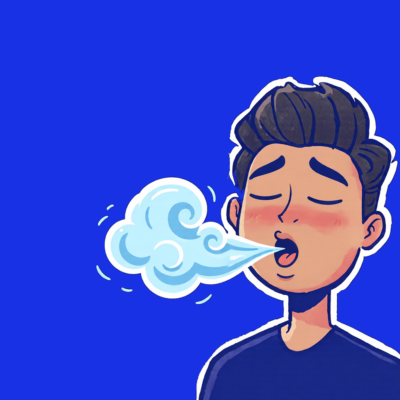 |
Start each session with breathing exercises in which you consciously pair exhalation with a gentle forward movement—this creates a “full-body massage” of the diaphragm. |
|
Sympathetic activation Parasympathetic recovery Variations |
|
Keep in mind that BailongBall isn’t just about relaxation; it also promotes a healthy activation of the sympathetic nervous system (fight-or-flight response)—which is important for stress resilience. So be sure to incorporate challenging and dynamic exercises as well. Depending on your training partner, this allows you to specifically target both aerobic and anaerobic systems, thereby enhancing the hormetic effect. |
|
Interdisciplinary synergies |
 |
When training with highly competitive athletes from other sports (e.g., 1-on-1 competitive players), BailongBall can be seen as a supplement to their respective competitive sports. A brief shift from sympathetic to parasympathetic activity can even help develop new game strategies in other sports |

Age-specific
Children and adolescents

- The joy of movement takes center stage – Trying out different swings or even tricks, the rhythmic interaction, and the pure feeling of moving lightly and freely, while also intentionally incorporating challenges. This immediately sparks a desire to participate and the motivation to keep trying new, creative “movement adventures” (easy-to-learn basic movements), and it fosters an immediate sense of achievement.
- Development of the learning zone – By introducing targeted stressors (challenging rallies or movements / utilizing the entire playing field), the learning zone is expanded without entering the overwhelm zone. This not only strengthens motor skills but also cognitive flexibility (“creativity under pressure”).
Adults

- Stress Reduction at Work / in Daily Life – a short warm-up with deep breaths, fluid, circular racket swings to activate the cardiovascular system and reduce stress, controlled ball exercises for flexibility and motor skills, and gentle stretching/ breathing, so that the parasympathetic nervous system is reactivated and participants can return to their workday feeling refreshed and ready to move
- Motivation Through Curiosity – Instead of setting purely performance-based goals, create a balance between what has already been learned and activities that range from easy to challenging, designed to build on individual skills.
Seniors and Rehabilitation

- Maintaining Mobility – Mobility exercises that engage the entire body without overtaxing it; complex movement sequences and swinging exercises provide a sufficiently challenging workout that keeps both mind and body active.
- Neuroprotektive Effekte – Durch die Kombination aus moderatem Aerobic Training, sozialer Interaktion und Hormetika (kurze, der Altersgruppe entsprechenden Intensitätsphasen) wird brain-derived neurothropic factor (BDNF) freigesetzt, was nachweislich das Hippocampus Wachstum fördert – ein wichtiger Faktor für die Prävention von Demenz.
As you can see, BailongBall has something to offer for every age group and demographic. What other sport can offer such variety and balance while being so healthy?
Fritjof Nelting
BailongBall Instructor
Mike Ritz
BailongBall Instructor